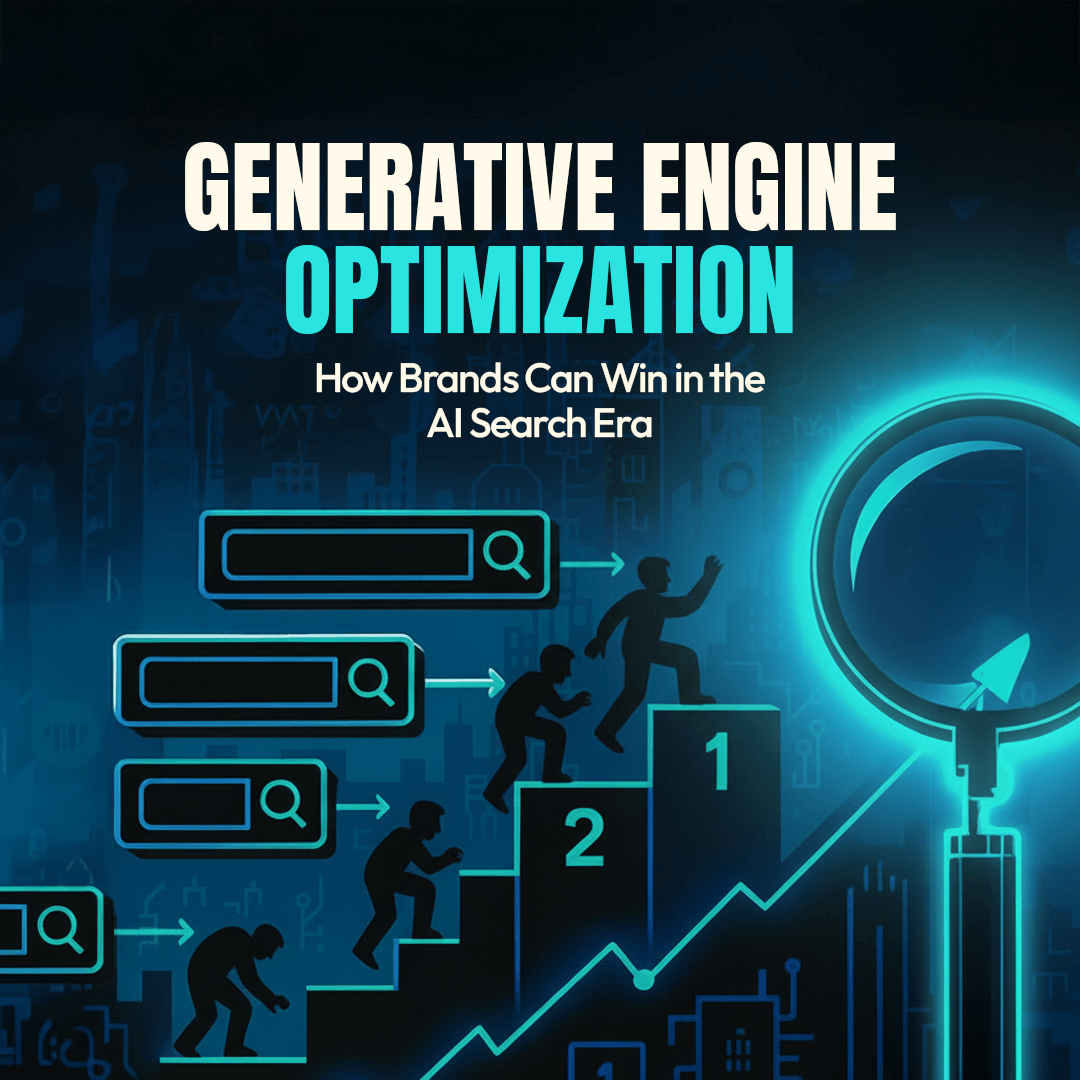
Generative Engine Optimization – How Brands Can Win in the AI Search Era
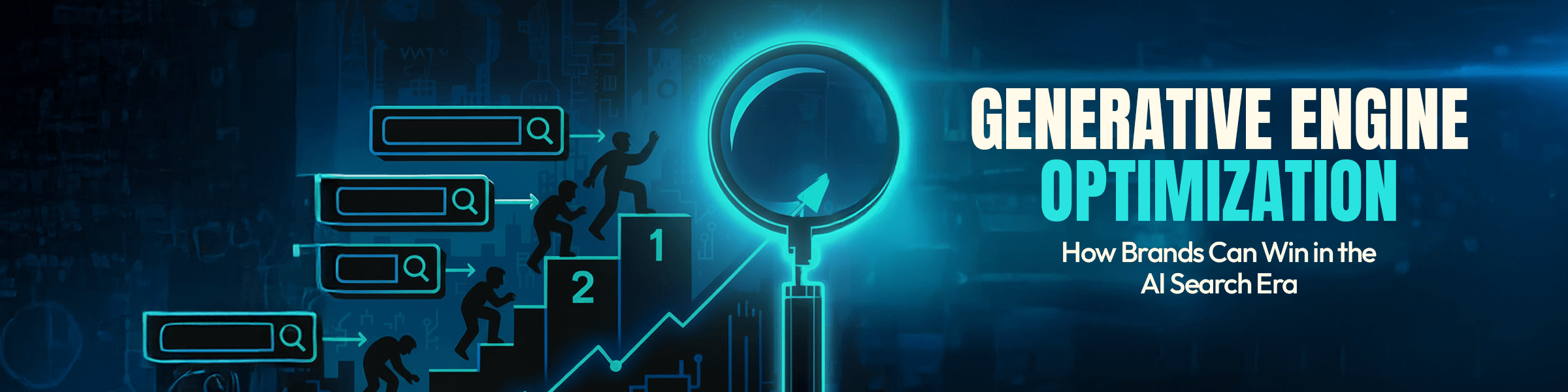
Generative Engine Optimization – How Brands Can Win in the AI Search Era
There was a time when Google Search felt like the final boss of the internet. Rank on page one and life was good. Rank in the top three and your marketing team got celebratory chai for a week. Today that world feels as distant as the early seasons of Game of Thrones when characters actually survived. The rules have changed. The battlefield has shifted. And for any brand working with a digital marketing agency in India, the real disruption is not another competitor but the rise of AI Answer Engines.
ChatGPT, Gemini and even Google’s own AI Overview now answer questions instantly, without sending users to your website. Your content fuels the answer, but your brand never gets the click. It is the digital equivalent of writing a bestseller and watching someone else read the summary out loud.
If you are a Marketing Director, CMO or business owner in India wondering why your rankings look strong while your traffic drops quietly in the background, this is why. The AI Search Era has officially begun and traditional SEO cannot protect you anymore.
This is where Generative Engine Optimization steps in. GEO is the next evolution of search strategy. It is how leading brands make AI engines cite them, trust them and use their content inside answers. At WeBeeSocial, we see brands moving from Search Engine Optimization to something more powerful. They are fighting for citations, not clicks.
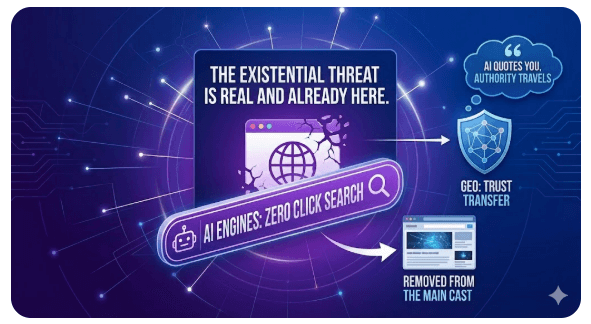
The existential threat is real and already here
Zero Click Search is not a trend. It is the new norm. AI engines are now the internet’s primary answer layer. And if your brand is not visible there, you eventually lose influence, recall and authority. Think of it like being removed from the main cast of your own show. Your website might still rank, but you are no longer part of the conversation.
GEO solves this by shifting your strategy from traffic hunting to trust transfer. You want the AI to treat your content as a verified, primary source. When AI quotes you, your authority travels even without a click. And that authority converts.
Strategy One: Architect content for AI citation
Your content must now be easy for AI to understand, segment and quote. This requires a very different level of structuring.
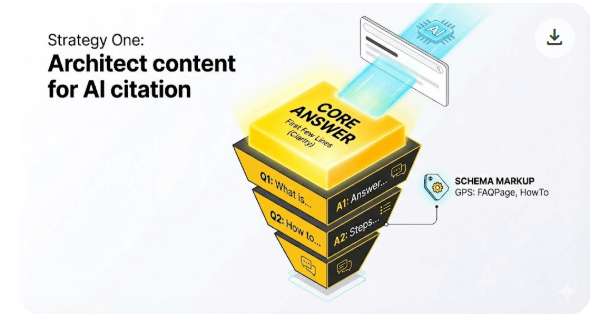
Start with the inverted pyramid. Give the core answer in the first few lines. AI models love clarity. The more direct the insight, the higher the chance it gets lifted into an answer.
Use semantic segmentation. Break content into question based subheadings. Think like a user. What would they ask? What variation of that question shows intent. When your content is structured as clean question and answer blocks, AI engines can pick exact pieces with accuracy.
Upgrade your schema markup. FAQPage, HowTo and Article schemas act like a GPS for AI crawlers. They highlight key answers and signal which parts of your content are authoritative. In the GEO era, schema is no longer optional. It is the scaffolding that makes your content readable to machines.
Leading brands in India are already seeing higher AI visibility after adopting this structure. It is content built for humans and machines at the same time.
Strategy Two: Increase verifiable expertise and public consensus
In traditional SEO, backlinks were everything. In the AI Search Era, they matter less. The new authority signal is verifiable expertise.
This is where E E A T becomes essential. AI engines check for credible authorship. They look for real world expertise, industry experience and consistent profiles. When your content is written by actual experts, the AI treats it as a safer and more reliable source.
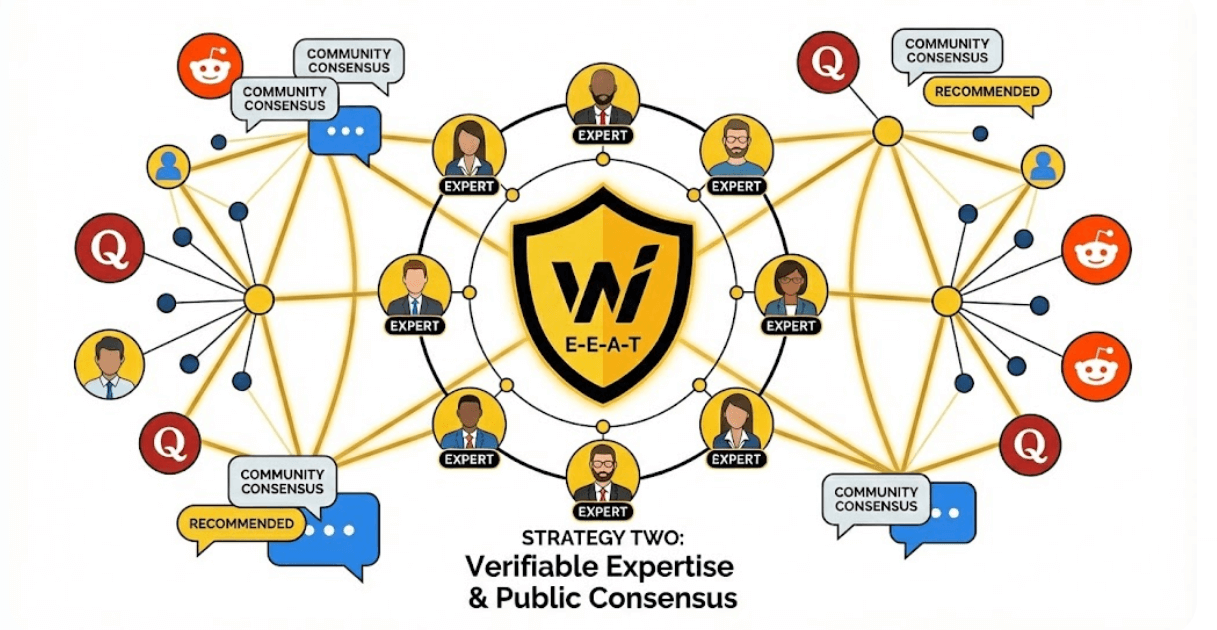
Public consensus also plays a major role. AI systems scan Reddit, Quora and community threads to understand how real users talk about your brand. A recommendation from a community member can matter more than a backlink. It validates your trustworthiness.
Smart brands are intentionally nurturing this authority layer. They publish expert led content. They encourage discussions around their category. They create thought leadership that other users naturally reference. Over time, this creates a halo effect where the AI recognises you as a default source.
Strategy Three : Measure the metrics that actually matter in an AI first world
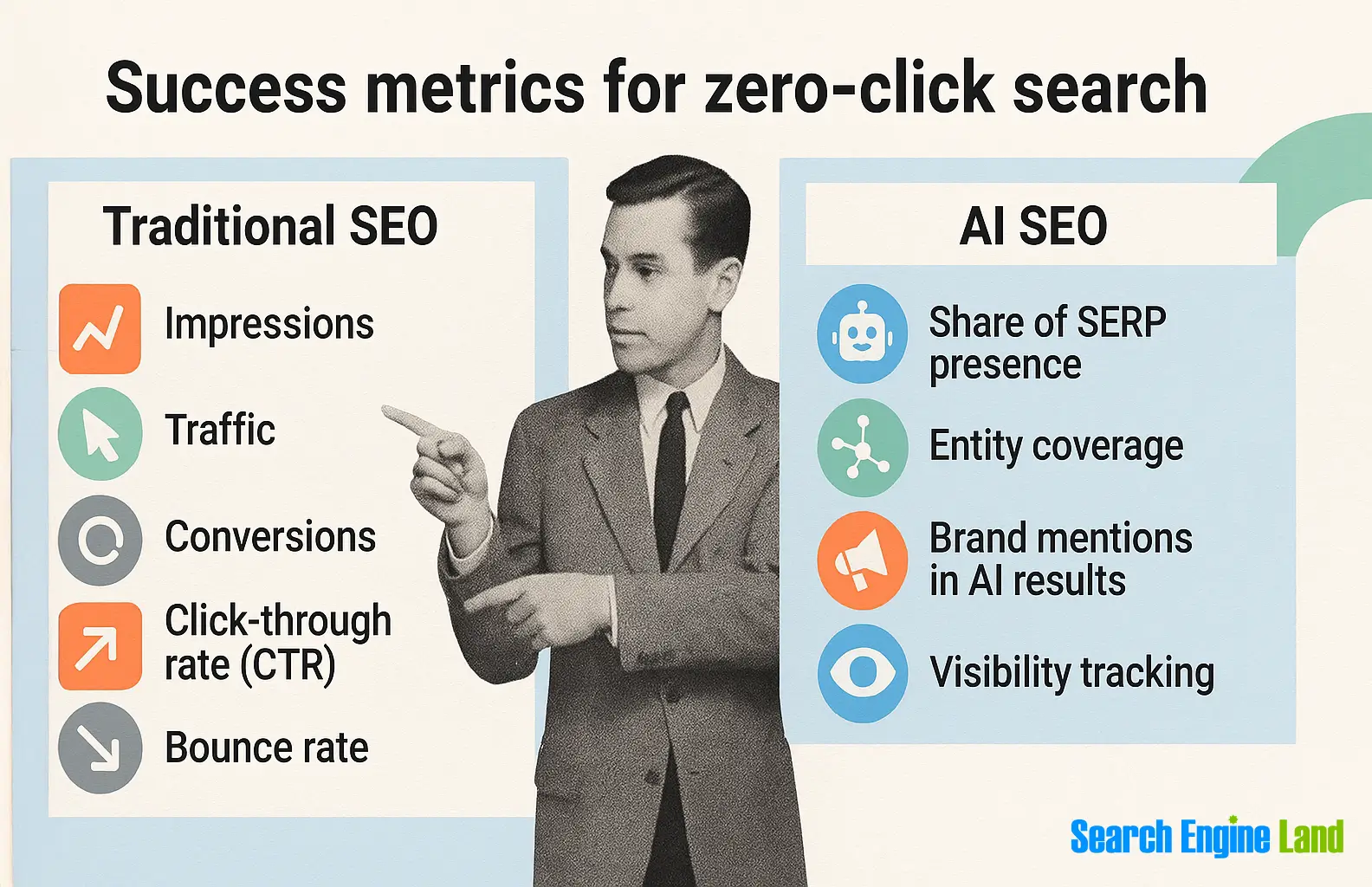
Organic traffic will not reflect influence anymore. If AI engines are using your content inside their answers, you may not get a click at all. But your leadership presence still grows.
This is why Share of AI Voice is now the most important performance indicator. It measures how often your brand appears in AI answers across platforms. It shows whether the AI considers you a trusted source.
Another metric is the Generative Appearance Score. It tracks how frequently your brand is referenced in snippets, summaries, product recommendations and factual responses created by AI engines.
These metrics directly influence real world conversions. If a user sees your brand in AI results, trust is formed even before they reach your website. This creates warmer traffic and stronger intent.
Brands that adopt these new metrics early will dominate decision journeys long before their competitors realise what changed.
Conclusion : Stop chasing clicks and start chasing citations
Traditional SEO is not dead, but it has lost its throne. The centre of the internet has shifted from search results to AI answers. And the brands that win are the ones that learn how to show up inside those answers.
Generative Engine Optimization is your roadmap to that future. It protects your visibility. It strengthens your authority. And it helps your brand stay relevant across every platform where AI gives answers.
If you want to know how AI engines see your brand today, our team can run a complete AI Readiness Audit for you. As a leading digital marketing agency in India, we help brands shift from being ranked to being cited and trusted inside AI answers. This is how you stay visible in the AI search era.
Whenever you are ready, we are here to help you lead this shift.